
|
|||
|


 |
|

 |
|

| Home |
| About |
| Hobbies |
| Software |
| Hardware |
| ICT Hotlist |
| Purpose |
React:


Reloader Activator 3.4 Mega
 Back to the ICT-Hotlist...
How to retrieve your FTP passwords from FileZilla
You probably once got an e-mail with the FTP settings for a download site, entered the credentials in FileZilla, lost the mail and now someone else needs the FTP account. Or you got a new PC assigned and suddenly need to FTP a bug report, noticing your sites and passwords are not transferred to the new PC. Of course you can contact your ftp partner, fill out a few forms, send them in and wait a few days whilst your boss gets angry behind your back when the sales system grinds to a halt.As you by now know from reading all the other tips, they do not work as FileZilla now encrypts the password in the configuration file.
These are the steps to get your password with the current versions of FileZilla.
- Open the file explorer and paste the path %AppData%/filezilla in the address bar and open the file sitemanager.xml in Notepad or your favorite text editor (NotePad++)
- Search for the section containing the ftp site. See for an example the next text box.
<Server>
<Host>ftp.van_Soest.it</Host>
<Port>21</Port>
<Protocol>0</Protocol>
<Type>0</Type>
<User>Johan</User>
<Pass encoding="base64">VGhpc0lzQVRlc3RQYXNzd29yZA==</Pass>
<Logontype>1</Logontype>
<TimezoneOffset>0</TimezoneOffset>
<PasvMode>MODE_DEFAULT</PasvMode>
<MaximumMultipleConnections>0</MaximumMultipleConnections>
<EncodingType>Auto</EncodingType>
<BypassProxy>0</BypassProxy>
<Name>ftp://ftp.van_Soest.it</Name>
<Comments />
<LocalDir />
<RemoteDir />
<SyncBrowsing>0</SyncBrowsing>
<DirectoryComparison>0</DirectoryComparison>ftp://ftp.van_Soest.it
</Server>
An example of a FileZilla server configuration. - You now can find the password in the line.
<Pass encoding="base64">VGhpc0lzQVRlc3RQYXNzd29yZA==</Pass>Notice the encoding type "base64". This explains the encoding type used to encrypt the password.
- Now open your favorite base64 decoding program. Every postmaster has one.
|
Use your favorite local base64 decoding program. This program keeps all data within the company walls and can do much more than the online variant demonstrated here.
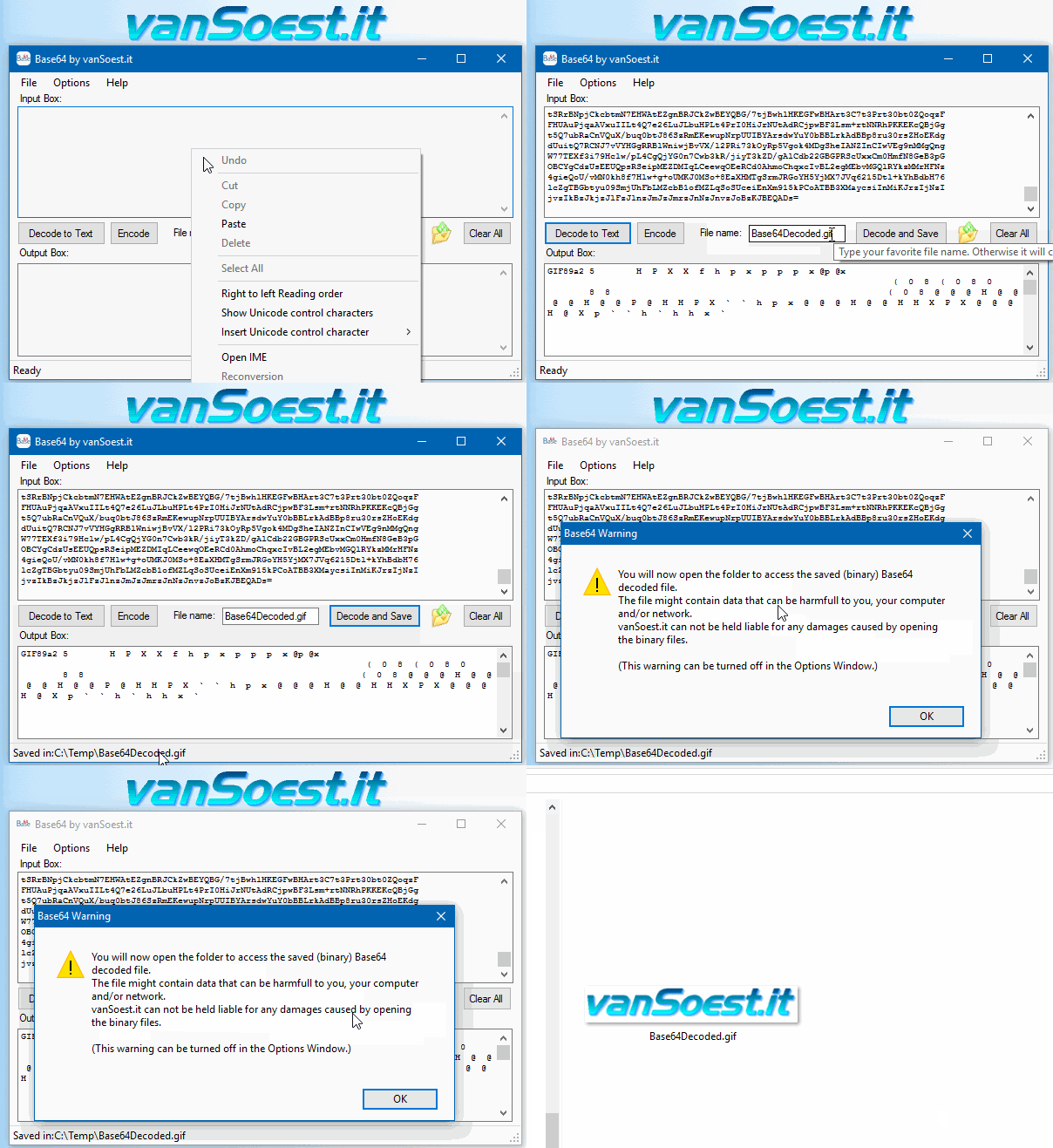 Copy everything between <Pass encoding = "base64"> and </Pass> into the text box. Now click on the "Decode to Text" button and the Output box will show your FileZilla password in plain text. |
Reloader Activator 3.4 MegaModifying core system files to bypass activation can lead to "blue screen" errors, broken Windows Updates, or long-term registry issues. Given the risks associated with using activators, several alternatives are worth considering: Reloader Activator 3.4 Mega This write-up is provided . Reloader Activator bypasses software licensing agreements and may violate Microsoft’s Terms of Service. Unauthorized use may result in deactivation, legal liability, or security vulnerabilities. Organizations should use legitimate volume licensing or subscription-based activation. Modifying core system files to bypass activation can Once the tool runs, it often does not require a constant internet connection to maintain the activated status. The Hidden Risks The Hidden Risks Reloader Activator 3 Reloader Activator 3.4 Mega is a third-party software utility primarily used to bypass product verification for various versions of Microsoft Windows and Office. While it is widely discussed for its ability to activate software without a legitimate product key, it is important to understand its functionality, risks, and legal implications before use. What is Reloader Activator 3.4 Mega? |

Scripts and programming examples disclaimer
Unless stated otherwise, the script sources and programming examples provided are copyrighted freeware. You may modify them, as long as a reference to the original code and hyperlink to the source page is included in the modified code and documentation. However, it is not allowed to publish (copies of) scripts and programming examples on your own site, blog, vlog, or distribute them on paper or any other medium, without prior written consent.Many of the techniques used in these scripts, including but not limited to modifying the registry or system files and settings, impose a risk of rendering the Operating System inoperable and loss of data. Make sure you have verified full backups and the associated restore software available before running any script or programming example. Use these scripts and programming examples entirely at your own risk. All liability claims against the author in relation to material or non-material losses caused by the use, misuse or non-use of the information provided, or the use of incorrect or incomplete information, are excluded. All content is subject to change and provided without obligation.